Is Snorkeling in Cancun Worth It? An Honest Look at the Reef in 2026

Is snorkeling in Cancun worth it? Yes, if you go to Puerto Morelos or Isla Mujeres expecting a working reef that's been through disease and a bleaching event, not the untouched postcard the brochures still sell. No, if you're picturing wall-to-wall coral and you're only willing to snorkel from a Hotel Zone beach. I've guided this reef since 2015 and watched the coral cover change; the fish haven't left, the coral has taken real damage, and a two to three hour trip runs $39 to $79 per person. Below is what you actually see, what's gone quiet, and who should spend their vacation morning elsewhere. If you're comparing options first, here are the Cancun reef trips we rate.
Quick answer
Yes, if you snorkel Puerto Morelos or Isla Mujeres with realistic expectations about coral loss from disease and the 2024 bleaching event; the fish life is still full and a trip runs $39 to $79 per person for two to three hours. No, if you expect an intact wall of coral, or you're only snorkeling from a Hotel Zone beach with no boat.
Key takeaways
- Trips run from $39 for the reef snorkeling tour up to $79 for the 5-in-1 tour that adds MUSA and a cenote
- The reef fish community, turtles, rays, and parrotfish, is intact even where coral cover has thinned
- Stony coral tissue loss disease and the 2024 bleaching event are real and worth knowing before you go, not a secret
- Skip it if a Hotel Zone beach with no boat is your only plan, there's no real coral at shore there
- Puerto Morelos beats Isla Mujeres for coral density; Isla Mujeres beats it for calmer, clearer water on a windy day
- Book with free cancellation given how often boats get held by weather in winter
The Short Answer
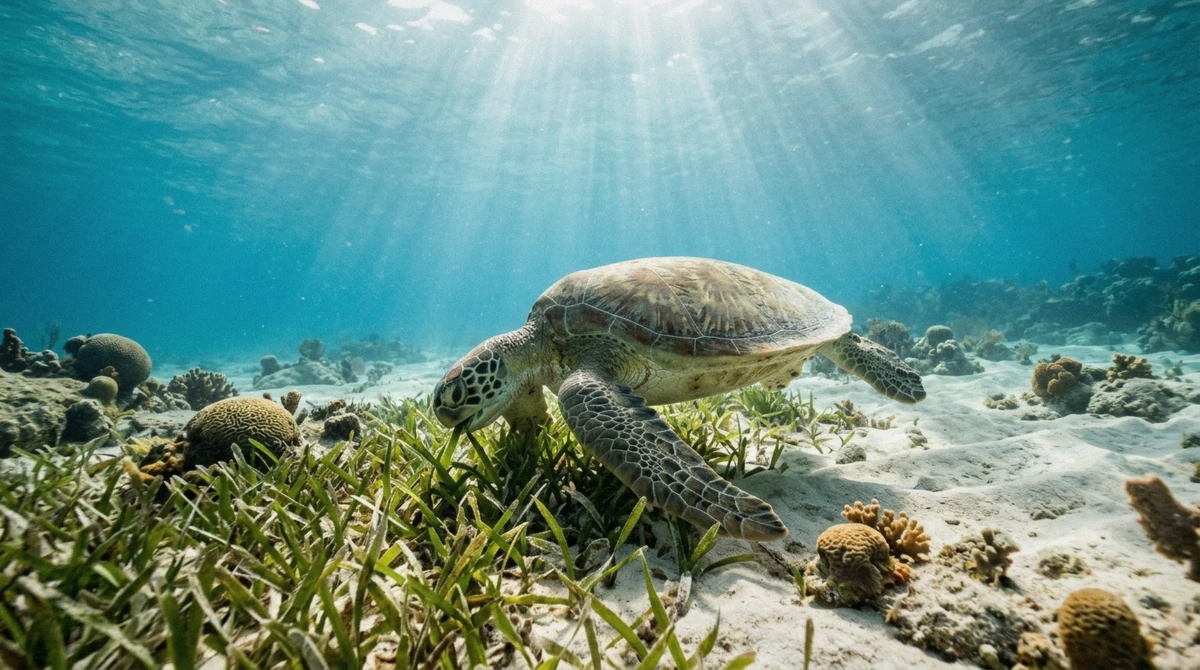
Snorkeling off Cancun is worth it when you treat the reef as what it actually is in 2026: a damaged but living system, not a diorama. The fish are there in real numbers. Parrotfish grazing on the reef flat, sergeant majors schooling by the dozen, the occasional green turtle grazing seagrass, none of that has gone anywhere.
What's changed is the coral itself, and a trip built around Puerto Morelos or Isla Mujeres still delivers a genuinely good couple of hours in the water.
- Worth it if: you want to see live reef fish and the odd turtle or ray without a multi-day dive trip
- Worth it if: you're already planning a Puerto Morelos or Isla Mujeres day and can add two to three hours
- Worth it if: you can accept that some coral colonies you photograph will be bleached, dead, or diseased tissue next to live growth
- Skip it if: your only access point is a Hotel Zone beach with no boat, since there's no real reef at shore there
- Skip it if: you've dived intact reef elsewhere recently and coral density matters more to you than fish life
- Skip it if: a windy, sargassum-heavy week has already buried the beaches and you can't get to a boat departure
Pros and Cons, Honestly
What we genuinely like
- Second largest barrier reef system in the world, verified by the Mexican government's own park documents
- Fish life stays full, parrotfish, angelfish, rays, turtles, even where coral has thinned
- Puerto Morelos and Isla Mujeres are both protected marine parks with real rules against touching or feeding
- A two to three hour trip fits into any vacation morning, from $39
- MUSA adds an underwater sculpture museum most reefs can't offer
The honest downsides
- Stony coral tissue loss disease has killed or diseased roughly a quarter of surveyed coral colonies since 2018
- 2024 brought the worst coral bleaching event on record for this reef system
- Sargassum can bury the beach approach for weeks at a time, mostly May through August
- Puerto Morelos is more exposed to sargassum than Isla Mujeres
- A boat is required for anything beyond wading, meaning weather can cancel your morning
Who it's NOT for: Anyone who's dived a healthy reef recently and wants coral density above everything else, or travelers unwilling to book a boat trip.
Puerto Morelos vs Isla Mujeres vs MUSA
These are the three real options within a short trip of the Hotel Zone, and they answer different questions.
| Option | What you get | Best for | Honest downside |
|---|---|---|---|
| Puerto Morelos reef | Two-reef sections inside a protected national park, dense fish life | Snorkelers who want the most coral and the most local feel | Most exposed of the three to sargassum on the approach |
| Isla Mujeres / Manchones | Calmer, clearer water off a sheltered island, plus reef stops | Beginners and anyone seasick-prone | Boat ride is longer, and reef here has also lost cover to vessel impacts |
| MUSA (Manchones, Nizuc, Punta Sam) | Over 500 submerged sculptures at 4 to 8 meters depth | Anyone who wants something besides fish and coral to look at | Manchones gallery is viewed from above, not up close; Nizuc and Punta Sam are the close-up ones |
If you only have time for one, Puerto Morelos gives the most reef for the money. If open water makes you nervous, Isla Mujeres is calmer. If you want a story to tell that isn't about fish, the MUSA underwater museum is worth the detour, especially the Nizuc and Punta Sam galleries, which sit at around 4 meters and are built for snorkelers rather than divers.
What the Reef Actually Looks Like Right Now
Here's the part most tour pages skip. Stony coral tissue loss disease reached the northern Mesoamerican reef system, which includes Puerto Morelos, in the summer of 2018 and spread across roughly 450 kilometers of reef within months. A survey covering the Mexican Caribbean, including Puerto Morelos, between July 2018 and January 2020 found that 17 percent of the coral colonies checked were already dead with signs of recent mortality, and another 10 percent were actively diseased.
Twenty-five of 48 coral species surveyed were affected, with pillar coral and brain corals losing more than half their colonies in the hardest-hit areas. Then 2024 brought the worst coral bleaching event on record for the whole Mesoamerican reef.
- This is not marketing spin from a competing destination, it's from a peer-reviewed regional survey and reported by conservation researchers
- Reef health has been described as poor overall, though 2024 was also the first year in five that showed some improvement, credited partly to better fisheries enforcement letting fish populations recover
- The improvement is in the fish, not yet in the coral, which is exactly why the reef still delivers a good snorkel even with visibly damaged coral
What this means practically: you will swim over live, colorful coral and, a few meters later, over pale or dead colonies. Both are true at once. The fish assemblage, parrotfish, angelfish, sergeant majors, blue tang, has not collapsed, and turtles and rays are still reliably sighted.
What you won't get is the unbroken coral wall some photos from a decade ago implied, and no honest guide should promise you that.
The Sargassum Reality Check
Sargassum, the brown seaweed that piles up on beaches, runs roughly March through October most years, worst from May through August, with the clearest window from November through March. 2026 has been a record year in Quintana Roo on the ground: over 106,000 tonnes collected as of mid-August, against 94,000 tonnes for all of 2025, and the season started around three months early, in January. Puerto Morelos, facing east with only partial reef protection, is among the more exposed spots on this coast; Isla Mujeres, sheltered on its west and north sides, tends to stay clearer.
- The seaweed piles up on the beach, not out on the reef; boat tours depart into open water where mats are scattered rather than accumulated
- Catamaran, MUSA, and reef boat trips generally run close to normal even during a heavy sargassum week on the beach
- Check live conditions before you commit to a beach day, sargassum monitoring networks post beach-by-beach status
Worth It Compared to Cozumel?
Cozumel is the honest comparison every Cancun visitor eventually makes, since it sits an hour's ferry from Playa del Carmen and has a reputation as Mexico's premier reef destination. Cozumel's reefs, protected as a national marine park since 1996 with strong current-driven drift snorkeling, have generally weathered SCTLD and bleaching somewhat better than the mainland reef, partly due to stronger currents and different exposure. If coral condition alone decides your trip, Cozumel currently has the edge.
| Factor | Puerto Morelos / Isla Mujeres | Cozumel |
|---|---|---|
| Coral condition | Visibly affected by disease and 2024 bleaching | Generally better preserved, though not untouched |
| Travel from Cancun Hotel Zone | 30 to 45 minutes by boat or road | Ferry from Playa del Carmen plus transfer, half a day round trip |
| Snorkel style | Anchored reef sections, calmer water | Current-driven drift snorkeling |
| Extras | MUSA underwater sculpture museum | Established dive infrastructure, no equivalent art museum |
If your trip is already Cancun-based and a Cozumel day isn't practical, Puerto Morelos or Isla Mujeres still deliver a legitimate reef morning, just don't expect Cozumel-grade coral.
The Cost of Finding Out for Yourself
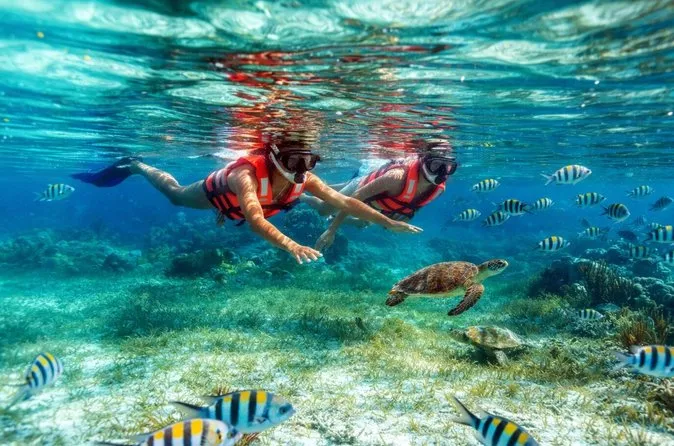
A shared Puerto Morelos reef trip runs from $39 to $45 for two to three hours and settles the question directly, cheaper than a lot of the excursions marketed harder in the Hotel Zone. The 5-in-1 tour at $79 stretches to seven hours and folds in MUSA, a shipwreck, and a cenote, worth it if you want the fullest possible answer to whether this coast is worth your snorkeling time, not just one reef section. We break down every fee and add-on, park charges, dock fees, tipping, in the full Cancun snorkeling cost guide.
The Honest Downsides
Ranked roughly by how often travelers actually run into them:
- Coral condition varies section to section, and a guide who tells you every patch is pristine is not being straight with you
- Winter cold fronts, common December through March, can close ports and cancel boat departures with 48 to 72 hours' notice; build a buffer day if your trip is short
- Sargassum can bury the beach for stretches of the summer, though it rarely stops the boat trips themselves
- Life jackets are mandatory for snorkelers in both parks, which some strong swimmers find restrictive but which the marine authority enforces for safety
- Crowding at MUSA's Manchones gallery is real at peak morning hours, since it's the most-visited of the three salons
When It's Worth It Most
December through March gives the clearest water and the least sargassum, though it's also cold front season, so a cancelled sailing is a real possibility that week. Morning departures, generally 8 to 10am, put you on the water before the wind picks up and before afternoon boat traffic. For the full month-by-month breakdown, including sargassum timing and the port-closure trade-off, see our best time to snorkel in Cancun guide.
Who Should Do It, and Who Should Skip It
If you're traveling with kids
Puerto Morelos' shallow reef sections and mandatory life jackets make it manageable for children over about 6; the reef snorkeling tour runs a gentler two-reef format.
If you can't swim
a life jacket keeps you afloat and most tours let non-swimmers stay near the guide, but talk to the operator before booking if you're nervous in open water.
If you're a first-timer who's never snorkeled
start with a shorter, calmer trip like Isla Mujeres sailing and snorkeling rather than a long multi-stop day.
If you're on a tight budget
the entry-level reef trip at $39 still delivers the core experience; skip the premium add-ons.
If you're a serious diver or underwater photographer
manage your expectations on coral density, or consider a Cozumel day instead if it fits your itinerary.
Frequently Asked Questions
Has the Cancun reef been permanently damaged?
Significant coral has died or been diseased since stony coral tissue loss disease arrived in 2018, and 2024 brought the worst bleaching event on record. Overall reef health is described as poor but showed its first improvement in five years in 2024, driven by recovering fish populations rather than coral regrowth.
Is the coral or the fish life more affected?
The coral has taken the real damage. Fish assemblages, parrotfish, angelfish, sergeant majors, rays, turtles, remain intact and by some measures are recovering, since better fisheries enforcement has let populations rebuild even where coral cover hasn't.
Should I snorkel Cancun or drive to Cozumel instead?
Cozumel currently has somewhat better-preserved coral thanks to its currents and marine park protections since 1996. If your trip is Cancun-based and a Cozumel day isn't practical, Puerto Morelos or Isla Mujeres still deliver a genuine reef experience, just with more visible coral damage.
Will sargassum ruin my snorkeling trip?
It can bury the beach approach, mostly May through August, but boat trips depart into open water where sargassum mats are scattered rather than piled up, so reef and MUSA tours generally run close to normal even in a heavy sargassum week.
Is it worth paying for the 5-in-1 tour instead of a single reef trip?
If you want the fullest answer to whether this coast is worth your time, yes, the 5-in-1 tour adds MUSA, a shipwreck, and a cenote to the reef stop for $79 over seven hours. If you just want to test the water, the $39 reef-only trip answers the question faster and cheaper.
Can I just swim out from a Cancun Hotel Zone beach and see coral?
No, not meaningfully. The Hotel Zone beaches sit on sandy bottoms with no significant coral offshore, with one partial exception near Punta Nizuc that's effectively limited to guests of the adjacent hotel. Any real reef access requires a boat to Puerto Morelos or Isla Mujeres.
How much does it cost just to find out if it's worth it for you?
From $39 for a two to three hour Puerto Morelos trip, our cheapest honest test of the reef. Full pricing, fees and sample budgets are in the Cancun snorkeling cost breakdown.